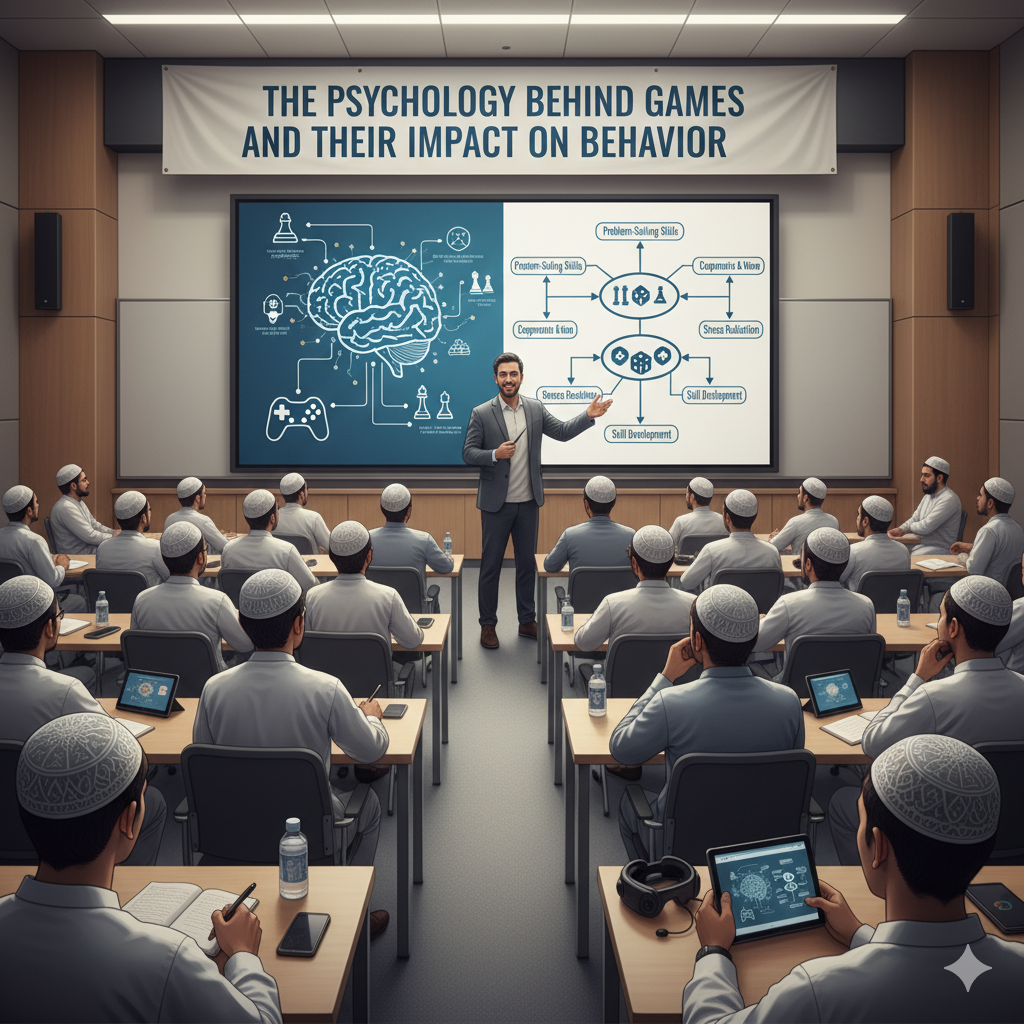
The Psychology Behind Games and Their Impact on Behavior
Games have been an integral part of human culture for millennia, but what is it about gameplay that captivates us so deeply? Understanding the psychological mechanisms behind games helps us appreciate how they influence behavior, shape social interactions, and even affect our cognitive development.
The Fundamental Appeal of Games
At their core, games tap into fundamental human psychological needs: the desire for competence, autonomy, and relatedness. When we play games, we experience a sense of mastery as we overcome challenges, freedom in our choices, and connection with others through shared experiences.
This psychological framework explains why games like our Halal Spin the Bottle can be so engaging while still maintaining Islamic values. By designing game mechanics that reward positive behaviors and encourage meaningful social interactions, we create experiences that are both enjoyable and spiritually beneficial.
"Games are the most elevated form of investigation." - Albert Einstein
How Game Mechanics Influence Behavior
Game designers utilize specific psychological principles to create engaging experiences. Understanding these can help us make informed choices about the games we play and how they might affect us:
1. The Power of Immediate Feedback
Games provide instant responses to our actions, creating a powerful learning loop. This immediate feedback reinforces behaviors and helps players understand cause-and-effect relationships. In our Halal Spin the Bottle game, positive reinforcement for appropriate interactions strengthens Islamic social etiquette.
2. The Dopamine Reward System
Accomplishing tasks in games triggers dopamine release in the brain, creating feelings of pleasure and satisfaction. This neurological response explains why games can be so compelling. By aligning these rewards with virtuous actions, we can encourage positive behavioral patterns.
3. The Flow State
Well-designed games create a state of "flow" - complete immersion in an activity where challenge level perfectly matches skill level. This psychological state is associated with happiness and peak performance, making games powerful tools for positive engagement.
4. Social Connection and Belonging
Multiplayer games satisfy our fundamental need for social connection. Shared experiences create bonds and strengthen relationships. Our Halal Spin the Bottle game leverages this principle to build community while maintaining Islamic boundaries.
Applying Positive Psychology to Game Design
Understanding these psychological principles allows us to design games that promote wellbeing rather than simply maximizing engagement. Here's how we've applied positive psychology to our Halal Spin the Bottle:
- Pro-social tasks that encourage kindness and cooperation
- Meaningful challenges that build real-world skills
- Islamic learning integration that makes religious education engaging
- Appropriate social boundaries that respect Islamic values
- Positive reinforcement for virtuous behavior
- Community-building mechanics that strengthen Muslim bonds
The Impact of Games on Cognitive Development
Beyond immediate enjoyment, games can have lasting effects on cognitive abilities. Strategic games improve problem-solving skills, memory games enhance recall, and social games develop emotional intelligence. When designed with Islamic values, games become tools for holistic development - nurturing both worldly skills and spiritual growth.
Research shows that the brain remains plastic throughout life, meaning we can continue developing new neural pathways through engaging activities. Games that challenge us intellectually while reinforcing positive values offer a powerful combination for personal growth.
Making Informed Choices About Game Engagement
Understanding game psychology empowers us to make better choices about how we engage with entertainment. Consider these factors when selecting games for yourself or your family:
- Does the game reinforce positive values?
- Are the social interactions appropriate and respectful?
- Does the game encourage meaningful skills development?
- Is the time investment proportional to the benefits received?
- Does the game align with Islamic principles?
By applying psychological insights to game selection and design, we can transform entertainment from mere distraction into a tool for positive personal and community development. Games like our Halal Spin the Bottle demonstrate that fun and faith can coexist harmoniously when we understand the psychology behind gameplay.